


Most organizations feel like they have a reasonable handle on their workforce. Positions are filled, people are showing up, and the operation is moving. At a glance, things look fine.
But over time, it’s not uncommon to notice some other patterns. Some employees become strong contributors while others never quite get there. Turnover remains higher than expected, and supervisors spend more time reacting than leading. It’s easy to see these attributes as part of the job. Some of the new people are “good,” some are not.
At that point, it can be helpful to ask a different question. What is actually shaping the workgroup over time?
Something is doing the shaping. Every day, supervisors make small assumptions about who will stay, who is improving, and who might need to be replaced. Those decisions don’t feel significant in the moment, but repeated over time, they define the group.
If there isn’t a clear, consistent approach, the workgroup is still evolving. It just isn’t always evolving intentionally. Expectations begin to form based on what is tolerated and what is rewarded. That can show up as uneven accountability, inconsistent performance, and ongoing frustration.
Over time, this also shows up in the numbers. Every new hire starts as an investment, and payroll is expensive. The question becomes whether each employee is returning value to the company.
That only happens when the employee becomes a consistent contributor.
When that happens reliably, the workgroup strengthens. When it does not, negative impacts build over time, affecting culture, productivity, and overall performance. And that becomes expensive.
HR professionals understand that the first few days can have a disproportionate impact on the eventual success of new talent. Not just who is hired, but how that early period is observed and managed.
Without a consistent approach, strong contributors may not be developed as quickly, weaker fits may remain longer than intended, and supervisors are left to make uneven decisions. Over time, these small details have a big impact on outcomes.
At some point, the question begins to change. It is no longer just about filling positions. It becomes a question of how consistently new hires are turning into contributors, because that is what ultimately shapes stability, productivity, and long term performance.
This is also where the role of staffing can begin to look different. According to Indeed, more than two thirds of American businesses use a staffing partner for talent acquisition. That is a practical and important use of the model, but it is only the first step.
When the first few weeks are approached intentionally, new talent is far more likely to develop into long term, productive contributors.
For HR leaders, this creates a different kind of opportunity. Not a move away from existing responsibilities, but a clearer connection between workforce decisions and business results.
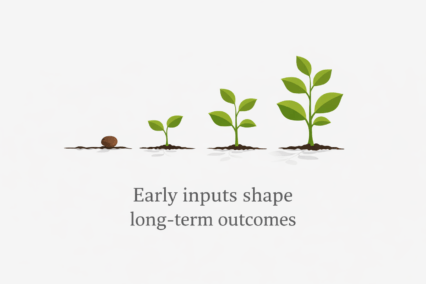
The early days of employment do not just influence how someone starts. They play a meaningful role in what that employee becomes, and over time, that shapes the strength of the entire workgroup.

Steve Pluim is the president of TalentTeam, a Salt Lake City based staffing and recruiting firm.
Steve can be reached by email at steve.pluim@talentteam.com
 Connect with Steve on LinkedIn